
Planning Permission vs Building Regulations: What’s the Difference?
Blueprint UK
6/17/20261 min read
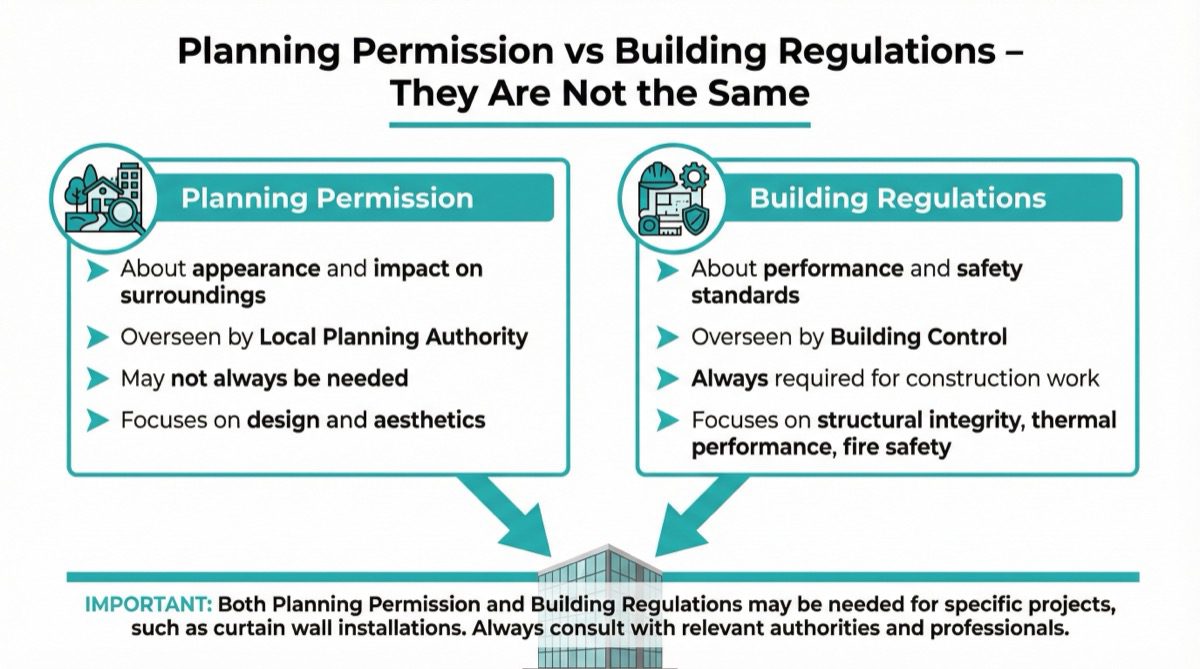
Many homeowners assume Planning Permission and Building Regulations are the same thing. In reality, they are two completely separate approval processes.
Planning Permission focuses on how a development affects the surrounding area. Local authorities consider factors such as appearance, size, impact on neighbours, and compliance with planning policies.
Building Regulations focus on safety and construction standards. They ensure that the structure is safe, energy efficient, properly ventilated, and built in accordance with current regulations.
It is possible for a project to require Planning Permission, Building Regulations approval, both, or neither. For example, many house extensions fall under Permitted Development and may not require Planning Permission, but they will almost always require Building Regulations approval.
A common mistake is obtaining Planning Permission and assuming construction can begin immediately. Before work starts, technical information such as structural calculations, Building Regulations drawings, insulation details, drainage information, and other compliance documents may still be required.
For structural alterations such as wall removals, loft conversions, and extensions, Building Control will often request structural calculations prepared by a qualified engineer.
Understanding the distinction between these two processes helps homeowners avoid delays and unexpected costs.
At Blueprint UK, we guide clients through Planning Permission, Permitted Development, Building Regulations, and Structural Engineering so projects can move smoothly from concept to construction.
Contact
Reach out for thoughtful engineering advice
+44(0)2035763580
© 2025. All rights reserved.